
Give Us A Call 561.989.8373
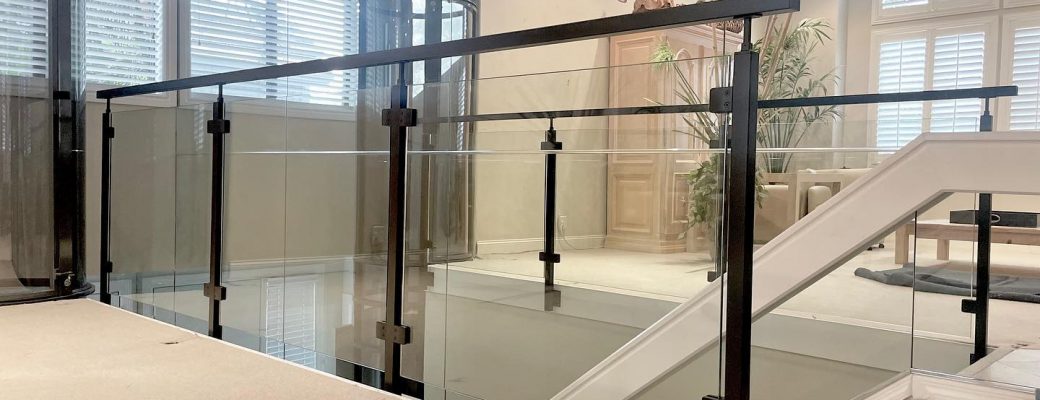
Railings have one job, keeping people safe, but they also decide what your stairs, balcony or pool area looks like. The most common options in South Florida are glass, aluminum picket, cable and concrete or wood balusters. We install glass railings, so we’re biased. We’ll still give you the honest pros and cons of each.
| Glass | Aluminum picket | Cable | Concrete or wood balusters | |
|---|---|---|---|---|
| Views | Open, nothing blocks them | Vertical bars | Thin horizontal lines | Mostly blocked |
| Look | Modern, clean | Standard | Modern, industrial | Traditional |
| Salt air and sun | Glass doesn’t rust or fade | Holds up if coated well | Needs good stainless fittings | Concrete can crack; wood needs sealing |
| Maintenance | Wipe down the glass | Low | Cable tension checks | Painting, sealing, repairs |
| Kids and pets | Nothing to climb or squeeze through | Gaps between pickets | Horizontal cables can be climbed | Gaps between balusters |
| Upfront cost | Higher | Lower | Middle | Varies |
Glass railings use panels of tempered or laminated safety glass, held in a floor channel, clamps or posts. Nothing blocks the view, which is why they’re so popular on balconies, pool decks with water views and open staircases.
What we like about glass: it doesn’t rust, rot or fade, so it holds up to South Florida sun, humidity and salt air. It’s also a solid barrier with nothing for small kids to climb or slip through. The trade-off is cost and cleaning. Glass costs more upfront, and it’ll show water spots and fingerprints, especially outside.
Aluminum pickets are the most common railing you’ll see on South Florida condos and pool enclosures. They’re affordable and low-maintenance when they have a good powder coat. The downside is the look: the vertical bars break up the view, and they look standard rather than custom.
Cable railings run thin stainless steel cables horizontally between posts. They look modern and keep most of the view. They do need periodic tension adjustments. Near the ocean, the fittings have to be marine-grade to avoid rust stains. Horizontal cables can also work like a ladder for small kids, which matters for some families.
Classic balusters look right on Mediterranean and traditional homes. They block most of the view, and in Florida they need upkeep: concrete can crack and need patching, and wood has to be sealed or painted to fight moisture and termites.
For most balconies, staircases and pool areas where the view is the point, glass is the upgrade people are happiest with years later.
Yes. They’re built with tempered or laminated safety glass and have to meet Florida Building Code requirements for height and load. Read our guide to Florida Building Code requirements for glass railings.
Glass itself doesn’t rust, rot or fade, which is why it holds up so well in South Florida sun and salt air.
Base-mounted, side-mounted, post-supported and top-rail systems. We compare them in our guide to types of glass railing systems.
Considering glass railings for your stairs or balcony? Call CFG at 561-989-8373 for a free estimate.
We install glass railings throughout Boca Raton, Miramar, Margate, Coral Springs and the rest of Palm Beach and Broward County.